The Future of ERP and AI Is Transforming Business Operations
A morning meeting spent comparing three different exports, manually re-entering orders into the accounting system, and sales opportunities that no one followed up on in time—these are not isolated operational errors. They are symptoms of a system that records data but does not help the business take action. The future of ERP and AI is therefore not about adding a chat window to enterprise software. It is about connecting transactional data, process rules, and automation so that routine work is completed faster, with fewer manual interventions and greater control.
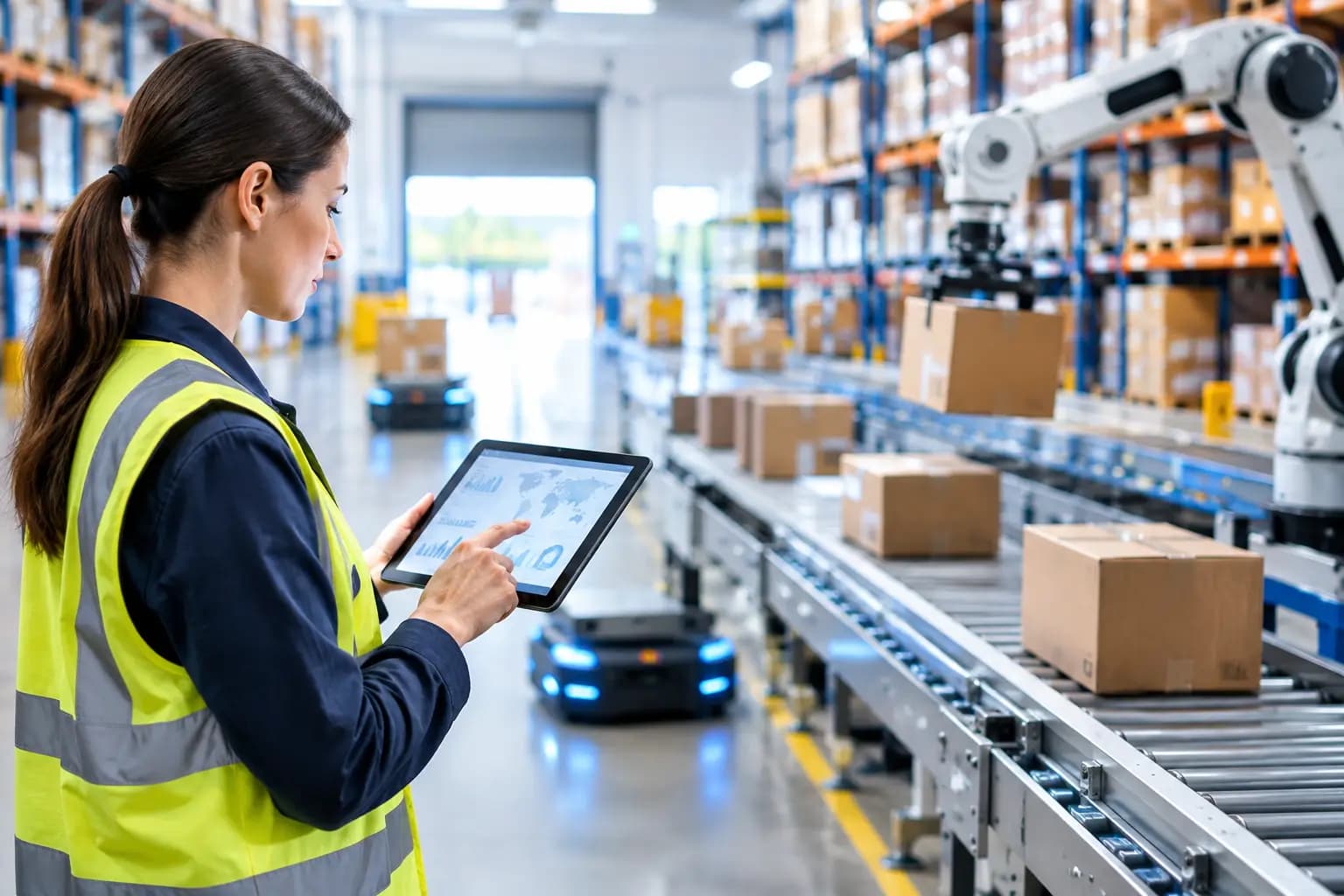
For a manufacturing company, this could mean earlier warnings about the risk of material shortages. In e-commerce, it could enable more accurate order-status management and faster responses to customers. In a sales team, it could prioritize leads based on the actual likelihood of a next step. The common denominator is not AI itself, but a well-managed flow of data across ERP, CRM, warehouse, accounting, support, and other applications in use.
ERP Will No Longer Be Just a System of Record
Traditional ERP performs a critical role: it brings together finance, procurement, inventory, manufacturing, orders, and projects. It is the source of truth about what a company has sold, purchased, produced, and invoiced. On its own, however, it usually does not tell employees what they should do next or identify when a process is starting to fall behind.
The new generation of ERP moves the system from the role of a passive register to that of an operational coordinator. It does not wait for a manager to open a report. It can send relevant information to the appropriate workflow, create a task, prepare a draft response, request approval, or alert the responsible person. The company still defines the rules, while automation takes over repetitive evaluation and routine communication.
This shift is particularly important for growing companies. A process that works with ten orders a day often turns into a chain of spreadsheets, emails, and improvised checks when the volume reaches one hundred. The problem is rarely that people are not working hard enough. The problem is that their capacity is being consumed by work that could be managed systematically.
How AI Creates Practical Value in ERP
AI delivers the greatest value in business environments when it shortens decision-making, processes unstructured information, or automates repetitive communication. This does not mean it should decide pricing strategy or approve payments without human oversight. It means it can prepare the necessary information and carry out safe actions within a precisely defined process.
Imagine a customer email asking about the status of a complaint. An AI agent recognizes the request, finds the customer and order in ERP, checks the case status in the service system, and prepares a response based on approved rules. If information is missing or the case exceeds a defined threshold, it passes it to an employee. The customer receives a prompt response, while the support team can focus on exceptional situations.
Sales can work in a similar way. AI Lead Finder helps identify suitable opportunities, AI Caller handles the initial contact, and CRM then records the outcome of the conversation. ERP provides the salesperson with the economic context: payment history, open orders, product availability, or customer profitability. Sales decisions are therefore based not just on a note in CRM, but on the entire customer relationship.
In reporting, AI accelerates data interpretation. A finance or operations manager no longer has to ask only what revenue was last month. They can examine which projects are deviating from plan, why the number of returns is rising, or where shipping times are increasing. However, the answer will only be useful if AI has access to current, properly connected, and semantically consistent data.
The Future of ERP and AI Depends on Integration
The most common obstacle is not the lack of an AI tool. It is a fragmented architecture. Customer data resides in CRM, the order in the online store, the invoice in the accounting system, inventory in the warehouse system, and communications across several email inboxes. If these sources are not connected, automation can only move the confusion between applications more quickly.
The foundation is to define clearly which system owns which data. ERP may be the primary source for inventory, invoicing, and orders, while CRM owns sales opportunities and customer interactions. It is essential to establish consistent identifiers, synchronization, and conflict-resolution rules. It is not enough to say that the systems are integrated. You need to know what data is transferred, when, in which direction, and what happens when an error occurs.
API connectivity, data migration, and a high-quality integration layer are not invisible technical details. They determine whether employees trust the information on their screens and whether AI can safely operate within real workflows. In projects like these, Logyloop combines ERP and CRM modernization with integrations and AI automation precisely because a standalone tool without operational context rarely delivers the expected results.
Do Not Automate a Chaotic Process
Before introducing AI, it is worth reviewing the process from beginning to end. Who initiates the request? What data do they need? Where do delays occur? Which exceptions require experienced judgment? And how can you tell that the task has been completed correctly? This step reveals not only opportunities for automation, but also unnecessary approvals, duplication, and unclear responsibilities.
Good initial projects have a clear scope and measurable impact. Examples include classifying incoming requests, adding information to CRM, automatically creating recurring reports, checking incomplete orders, or following up with new leads. These processes are repetitive, have accessible data, and produce results that are easy to verify.
By contrast, fully automating complex exceptions, complaints with legal implications, or non-standard pricing agreements should be introduced gradually. AI can prepare supporting information, categorize requests, and recommend next steps, but the final decision should remain with the responsible employee. Sensible automation is not the kind that replaces the most people. It is the kind that reliably eliminates the most unnecessary work without increasing operational risk.
Implementation Must Begin with Data and Accountability
A successful project does not begin with selecting a model, but with the company's priorities. Management should define a specific problem—for example, shortening support response times, reducing manual intervention in order processing, or accelerating monthly reporting. Only then does it make sense to identify the data, systems, integration points, and role of AI in the process.
Every automation needs an owner. Someone must be responsible for the quality of the input data, someone for the operational rules, and someone for continuously evaluating the results. The IT team can provide security, access controls, and integrations, but it cannot determine which exceptions are commercially acceptable without input from operations. The best results come from collaboration between finance, sales, operations, and technology teams.
Permissions and audit trails deserve particular attention. An AI agent should not receive broader access than it needs for a specific task. Sensitive operations require an approval step, a record of actions performed, and the ability to review or reverse an action. This approach is essential in regulated industries, but it also benefits ordinary businesses by increasing user trust and making incident resolution easier.
Measure Operational Impact, Not the Number of Features
The number of AI features implemented says nothing about their value. What matters more is whether a specific operational metric has changed. In support, this could be first-response time, the proportion of requests resolved without escalation, and customer satisfaction. In sales, it could be lead response time, the number of qualified meetings, or conversion rates. In logistics, relevant metrics include shipping accuracy, the number of manual corrections, and order-processing time.
Alongside direct time savings, monitor quality as well. Automation that processes more requests but creates incorrect records in ERP is not a success. It is therefore advisable to introduce the solution first on a limited sample, compare its outputs with manual work, and gradually refine the rules, prompts, and integration logic.
The future does not belong to companies with the longest list of AI applications. It belongs to those with clean data, connected systems, and the courage to move repetitive work into managed workflows. The practical next step is simple: choose one process in which people re-enter, search for, or chase information every day, and document how it actually works. That is usually where the change that employees and customers notice most quickly begins.